Project 7600: Our HALO Skydiving Adventure from 7,600 Metres
A jump from 7,600 metres, over two minutes of freefall, and oxygen as essential equipment. Discover our extraordinary HALO skydiving adventure in Denmark.
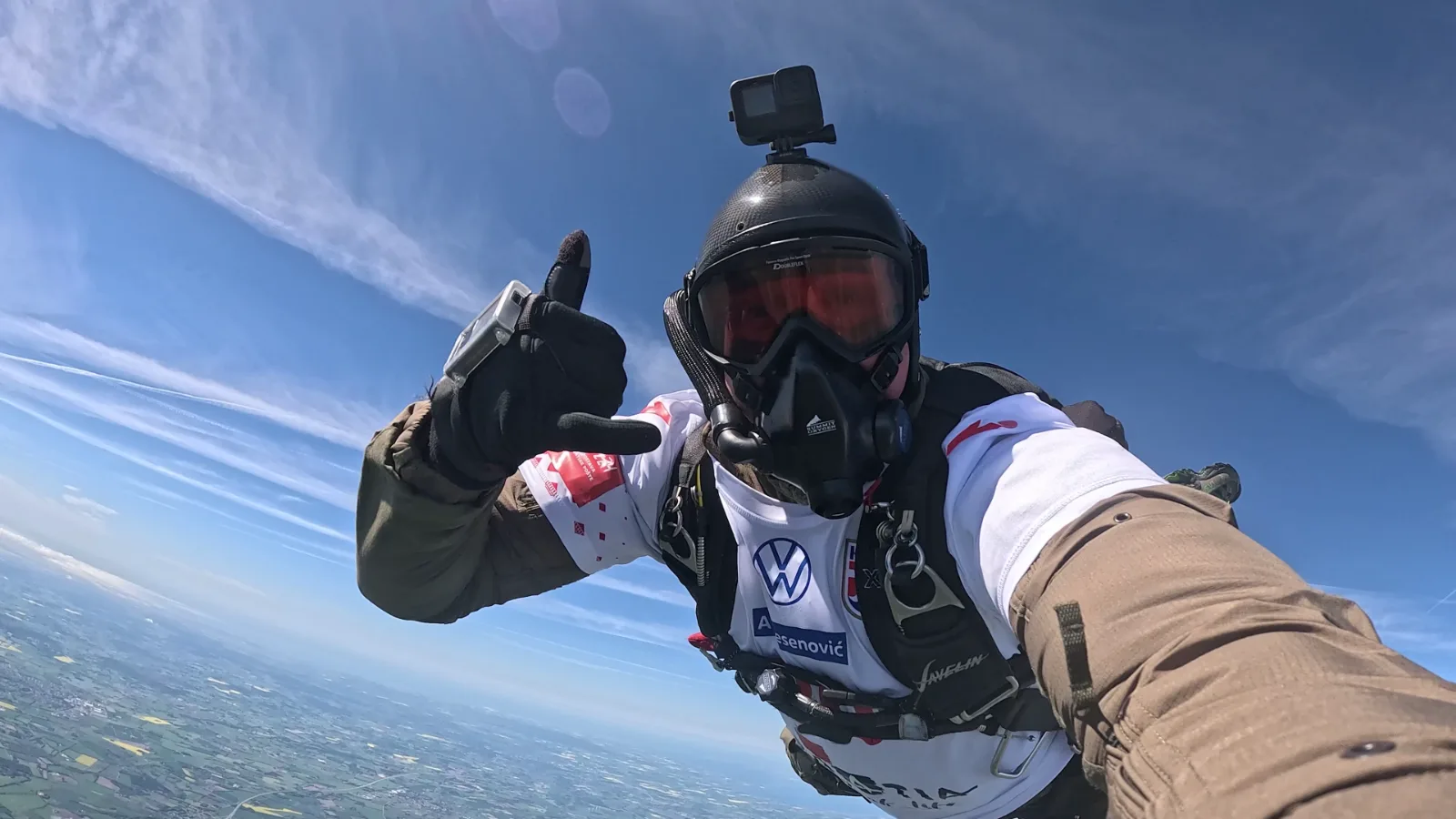
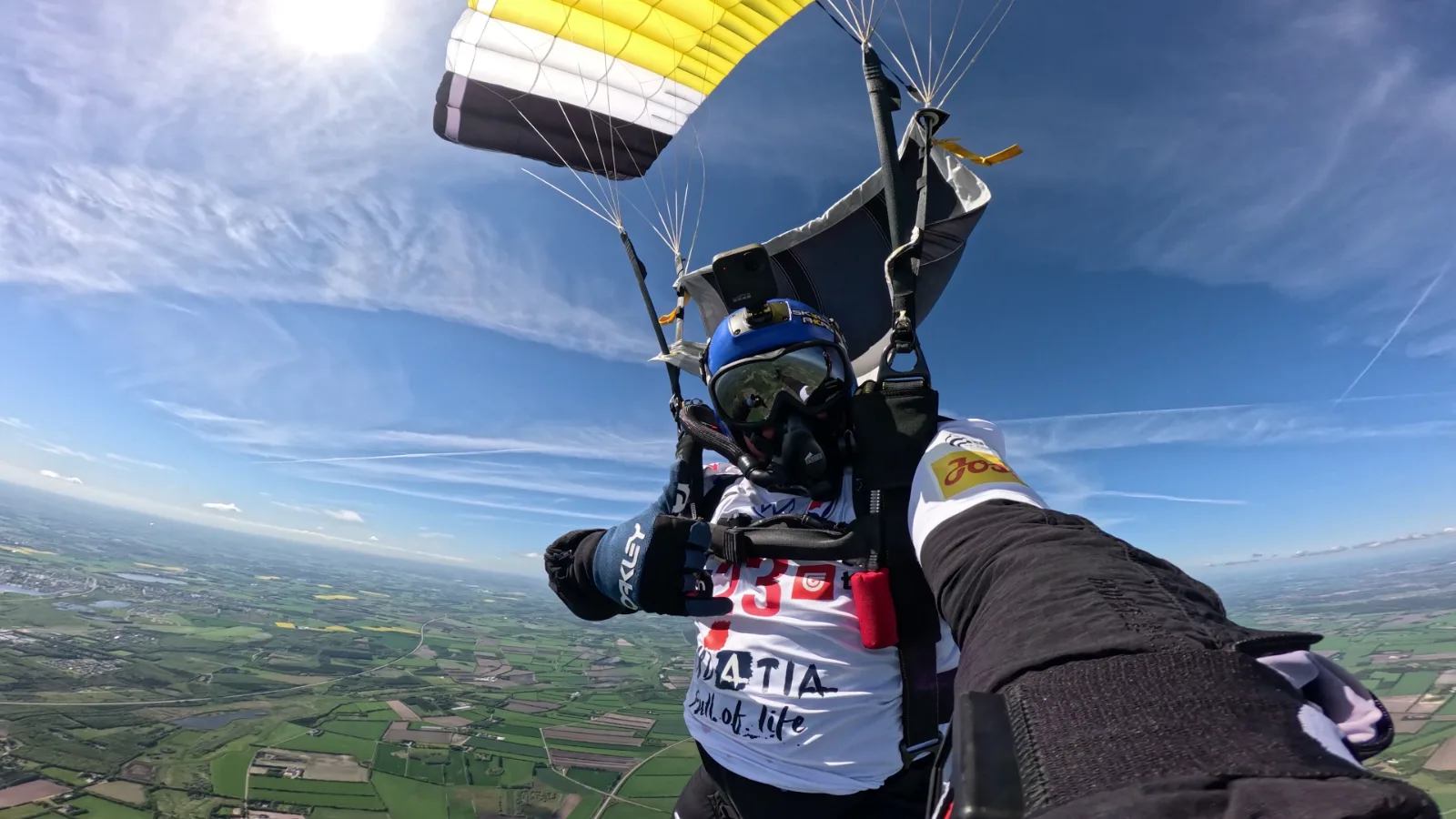
We jumped out of the aircraft, our oxygen masks securely fastened beneath our ski goggles. At this altitude, without supplemental oxygen, euphoria and impaired thinking can begin after as little as 15 seconds, with unconsciousness potentially following in just 180 seconds.
My body responded automatically, out of habit. I extended my legs and brought my arms in. Years of experience told me I should start moving forwards.
But nothing happened.
After 23 years of active skydiving, I never thought I'd feel like a beginner again.
But I'm getting ahead of myself. Let's go back to the beginning.
From a Beer in a Zagreb Pub to Denmark
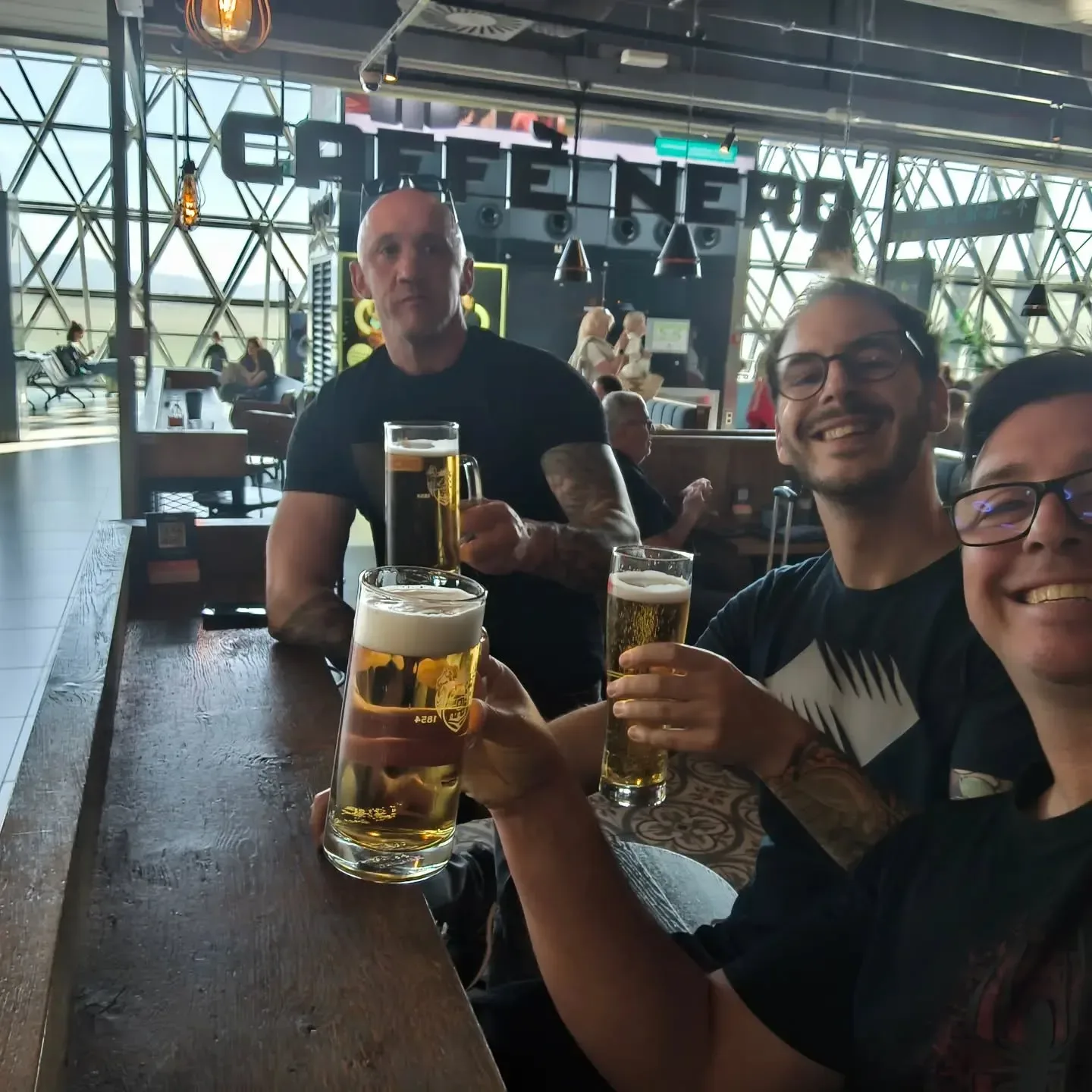
One clear evening in February, my friend and experienced skydiver Marino Radešić proposed a particularly entertaining idea over a beer: what if we went to Herning, Denmark, to perform a HALO skydive in honour of the Croatian national handball team, who had won bronze at the European Handball Championship (EHF EURO 2026) in that very city just a month earlier?
Genuinely intrigued, I started researching accommodation prices and promptly booked flights for Marino, Petar, and myself.
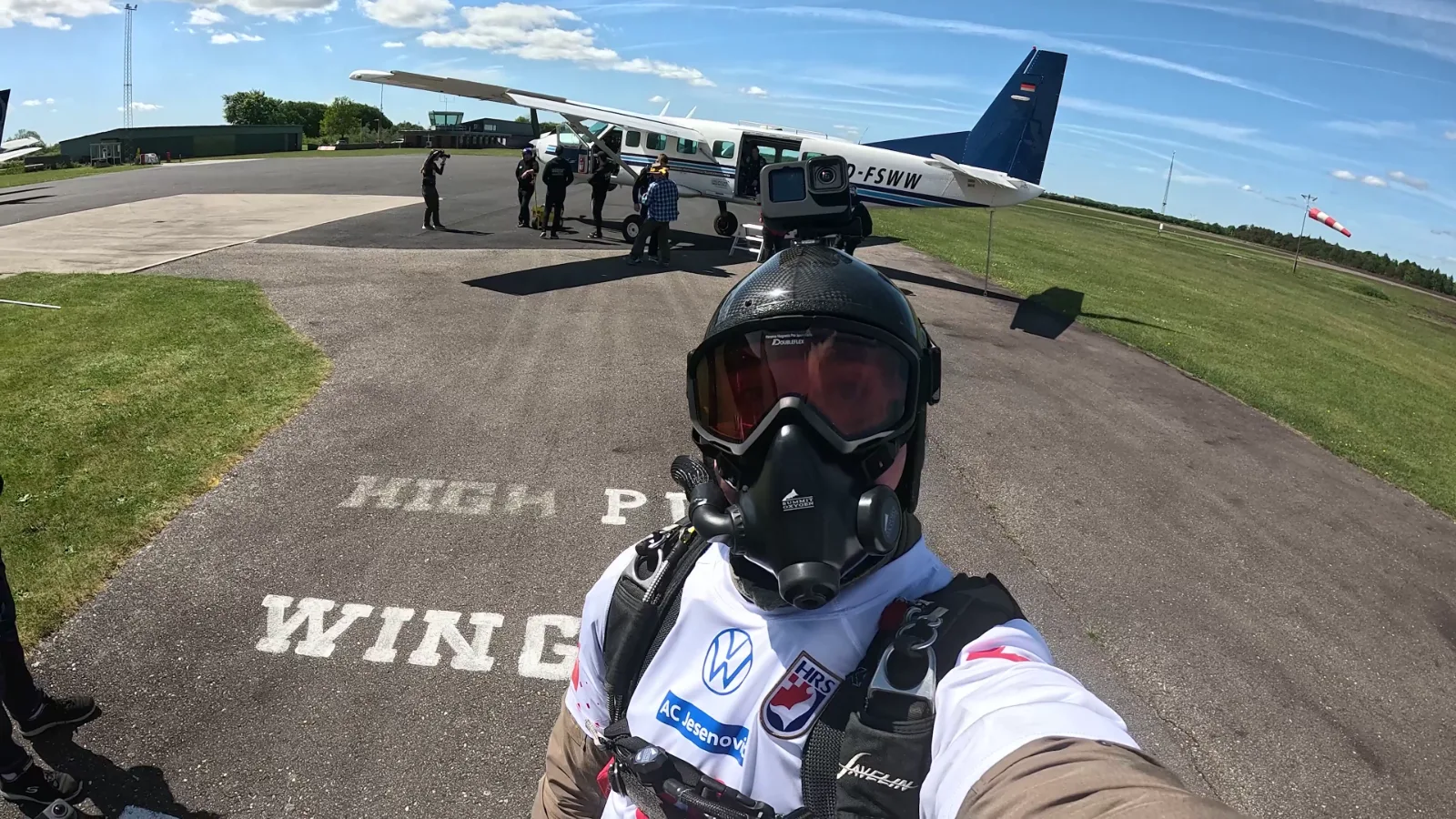
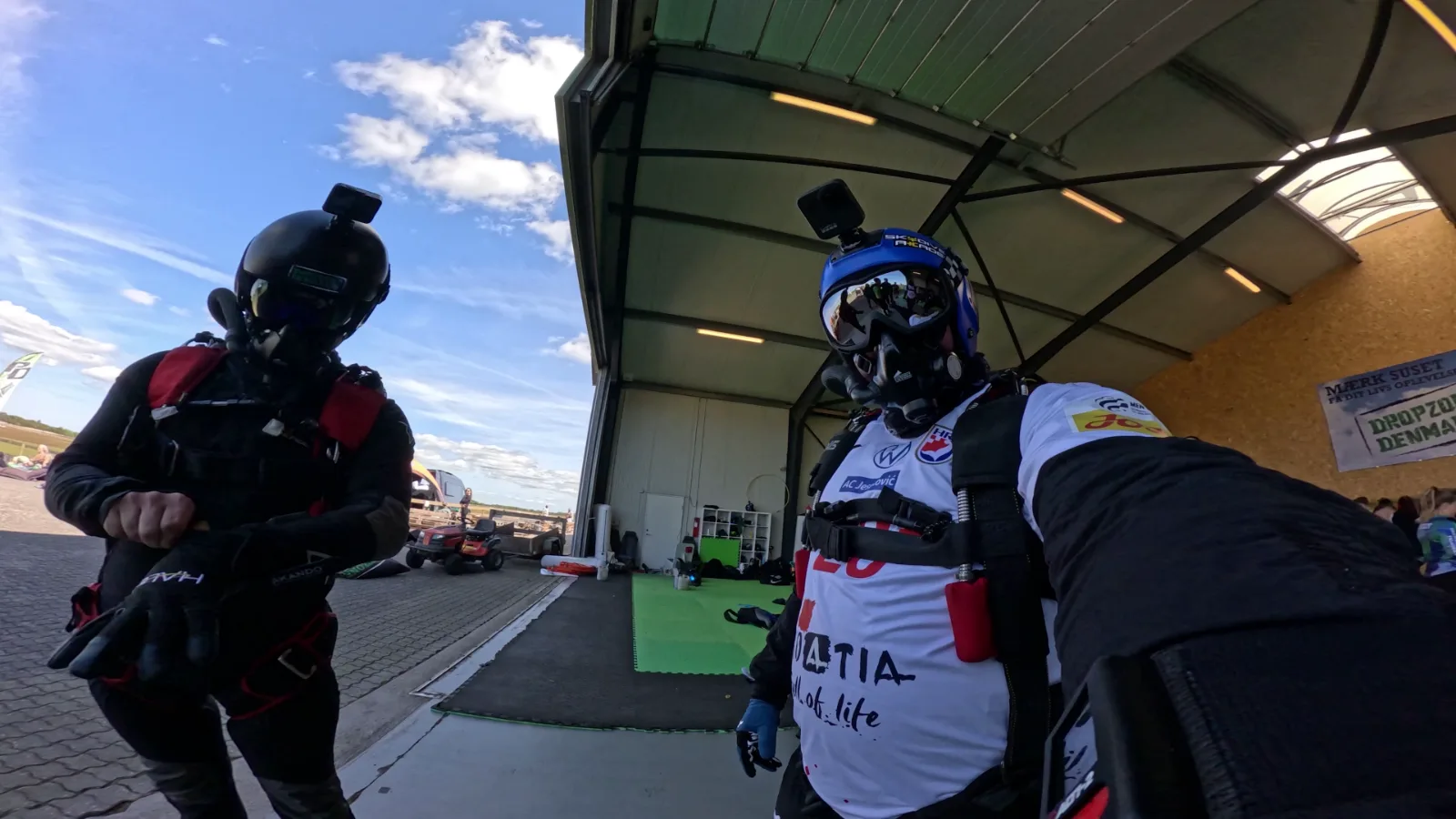
We booked our HALO jump with Dropzone Denmark, one of Europe's largest skydiving centres, located in Herning, central Denmark.
Marino took care of getting Croatian national handball team jerseys, I arranged the accommodation and flights, and Petar handled the rental car. We submitted the necessary documentation for our booking and eagerly awaited May, when our jump was scheduled.
Project 7600 had officially begun.
HALO Jump? What Does That Have to Do with a Telephone?
No, HALO isn't someone answering the phone with "Hello, Marko speaking!" It's an acronym for High Altitude Low Opening — a parachute jump from a very high altitude with the parachute deployed relatively low.
I know the terminology isn't particularly elegant, but it describes the jump rather well.
As altitude increases, one of the greatest dangers to skydivers becomes hypoxia — a medical condition in which the body's organs and tissues don't receive an adequate supply of oxygen.
Hypoxia is particularly dangerous because it can produce symptoms resembling intoxication, including euphoria and confusion. A skydiver or pilot experiencing hypoxia might not even be concerned about what's happening. Even if they recognise the symptoms, they may find the situation amusing rather than alarming, despite the possibility of losing consciousness shortly afterwards.
As altitude increases, the Time of Useful Consciousness (TUC) — the period during which a person can still think clearly and take effective action — decreases dramatically.
At 7,500 metres, a person without supplemental oxygen may remain conscious for only three to five minutes. However, the effects mentioned earlier, such as euphoria and impaired judgement, can begin much sooner.
That's precisely why HALO jumps at these altitudes require an independent supply of supplemental oxygen.
In our case, this consisted of an oxygen cylinder and a breathing system with a vest and mask, rather like the equipment worn by pilots in Top Gun.
We planned to deploy our parachutes at just 1,200 metres.
Arriving at the Dropzone and Getting Ready
The journey to Herning went more or less according to plan.
We landed in Malmö, picked up our rental car at the airport, and spent the night in the city centre. Naturally, we also sampled the local beer selection, and we're sorry to report that the rest of Croatia isn't missing out on much.
The following day, we set off towards Herning.
I won't bore you with the details of the drive, except to say that Denmark is a beautiful country and we genuinely enjoyed the journey.
But why Denmark?
For this kind of skydive, having an aircraft capable of reaching such an altitude simply isn't enough. What happens in the surrounding airspace is equally important.
At these altitudes, we share the sky with commercial aircraft. Skydiving activities must therefore be coordinated in advance with the relevant air traffic control authorities.
As it was explained to us, the area around Herning has favourable air traffic conditions for organising these kinds of operations.
That doesn't mean the sky is empty or that jumps can take place without restrictions. Behind our two minutes of freefall lies an enormous amount of planning and coordination that most skydivers are barely aware of while standing on the ground.
When we finally arrived at the skydiving centre in Herning, we spent the first day getting to know the dropzone, instructors, and coaches.
We attended the dropzone's safety briefing and spent the rest of the day making "ordinary" jumps from 4,500 metres.
The aim was to gain as much familiarity with the location as possible before heading into the unknown.
Once we'd jumped to our hearts' content, we also visited the Jyske Bank Boxen arena in Herning to see the place where our handball players had secured their European bronze medal.
An Extraordinary Jump Calls for an Extraordinary Aircraft
Another interesting feature of Dropzone Denmark is its truly unusual skydiving aircraft.
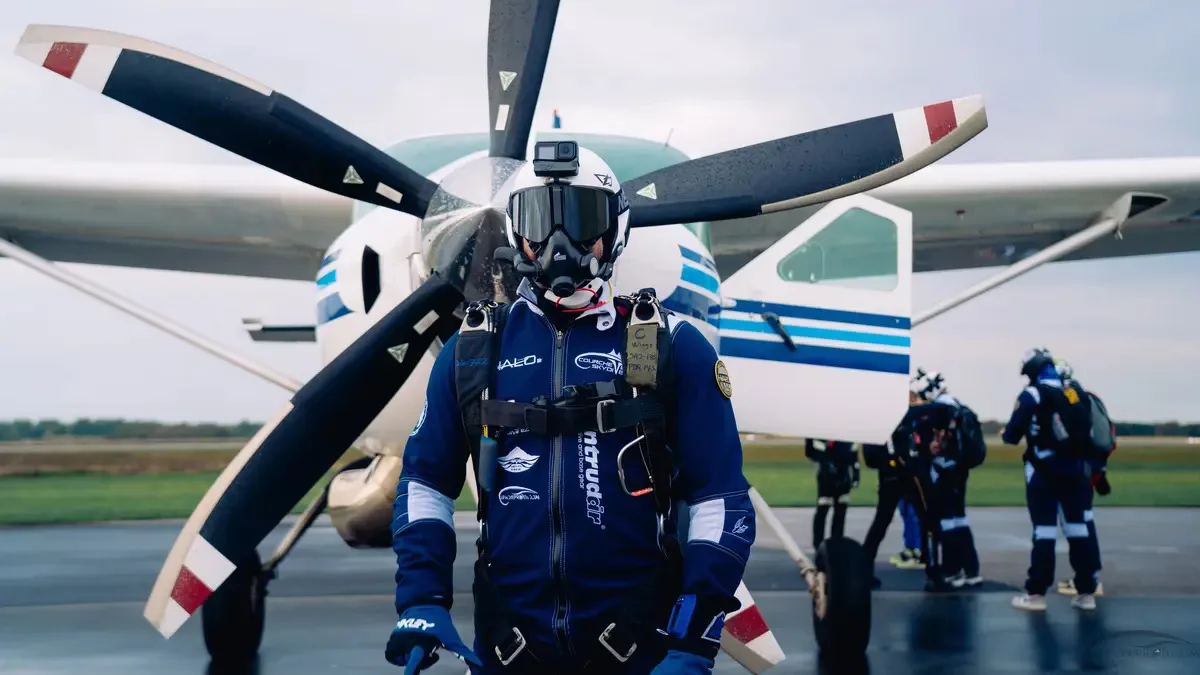
They operate a Cessna 208 Supervan, a relatively rare conversion of the Cessna 208B Grand Caravan performed by Texas Turbine.
Thanks to this conversion, the aircraft's engine power increases from an already respectable 678 horsepower to an incredible 900 horsepower.
A standard Grand Caravan carrying 20 skydivers takes approximately 30 minutes to climb to a jump altitude of 4,000 metres.
The Supervan reaches the same altitude in just 15 minutes.
Half the time!
The Supervan is also one of the few aircraft in Europe capable of supporting HALO operations, climbing to 7,600 metres in just 25 to 30 minutes.
The Day of the Jump
We woke up early, had breakfast, and headed to the dropzone.
We completed another practice jump before making our way to the briefing.
Performing a HALO skydive requires almost perfect weather conditions. Fortunately for us, the day of our jump was warm and sunny, without a single cloud in the sky.
Temperature is another interesting factor when performing HALO jumps.
For every 1,000 metres of altitude gained, the air temperature drops by approximately 6 degrees Celsius.
That means that at our jump altitude of 7,600 metres, the air temperature could be as much as 46 degrees lower than on the ground.
Every skydiver therefore needs to wear thermal layers, a windproof jumpsuit, gloves, and ski goggles to protect against the possibility of icing.
The briefing for the jump itself lasted 45 minutes.
We learned everything we needed to know about our external oxygen system, the TOA (Top Out Aero) Summit SOS, developed by Halo 2 Skydive.
This system has been used on numerous Mount Everest expeditions and HALO jumps, including jumps over Mount Everest and Mont Blanc.
It was developed by Tom Noonan and Paul-Henry de Baère in collaboration with Ted Atkins and was the first system of its kind made available for civilian use. Previously, systems of this type had been available exclusively for military operations.
Paul himself was there, and we quickly became friends.
Our conversation soon turned to Antarctica and the jumps they had performed there earlier that year.
As it happened, a friend of mine had participated in that expedition. As a qualified parachute rigger, I had packed both his main and reserve parachutes for the jump.
So it turned out that Paul and I already had a small connection, even though we'd never met before.
I'd played my part in that Antarctic adventure at a parachute packing table, and now I was sitting in Denmark talking to someone who had been directly involved in carrying it out on the other side of the world.
It's encounters like these that make skydiving trips even more rewarding.
You travel somewhere for the altitude and the jump, but you return home with new friendships and conversations about places you've never been.
We also discussed the effects of hypoxia mentioned earlier in this article, how to recognise its symptoms, and the emergency procedures we would follow if we suspected a failure of our oxygen supply system.
We reviewed the entire jump procedure, from boarding the aircraft and climbing to altitude to the exit, freefall, and landing safely back on solid ground.
Getting dressed and putting on all the equipment took almost an hour.
Marino and I pulled on our jumpsuits and Croatian national handball team jerseys for our little skydiving tribute to the team — from a slightly greater height and without the ball.
Each skydiver underwent three independent equipment and oxygen system checks, performed by three different people to minimise the possibility of error.
Everyday skydiving is very safe, but witnessing this level of preparation and attention to even the smallest detail was genuinely impressive.
Finally, we boarded the aircraft and began our climb towards 7,600 metres.
The adventure had officially begun.
More Than Two Minutes of Freefall
After 25 minutes of climbing, a light illuminated inside the aircraft, signalling that we were two minutes away from the jump.
I won't lie. My heart unexpectedly skipped a beat, and I felt that familiar mixture of positive excitement and nervousness.
When Petar and I opened the door, I was surprised by the view.
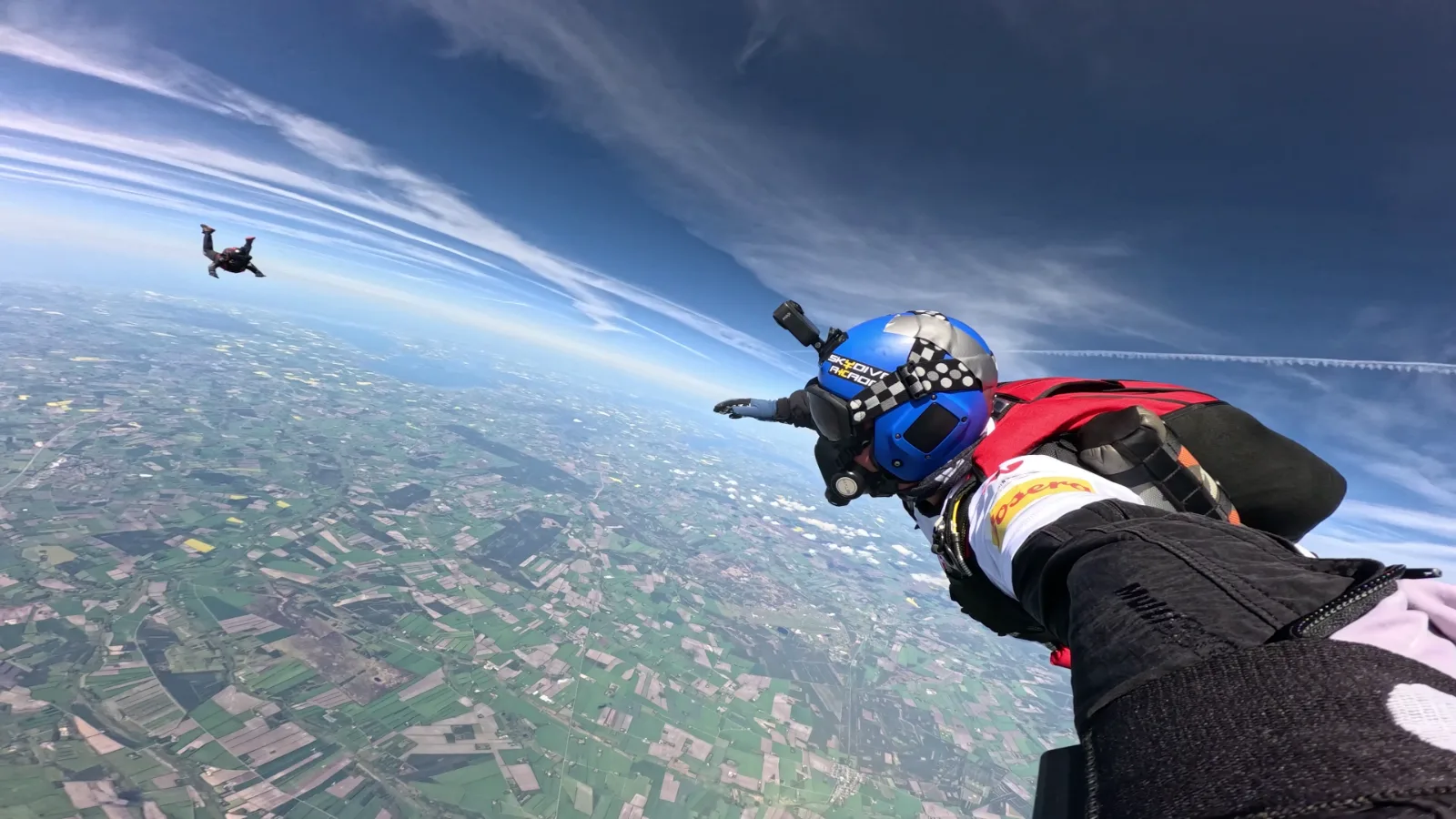
Despite flying above central Denmark, we could see the sea in the distance, more than 50 kilometres away.
The sky was a deep, dark blue and unbelievably clear. It was a sight unlike almost anything I'd seen during my skydiving career.
It was also incredibly cold.
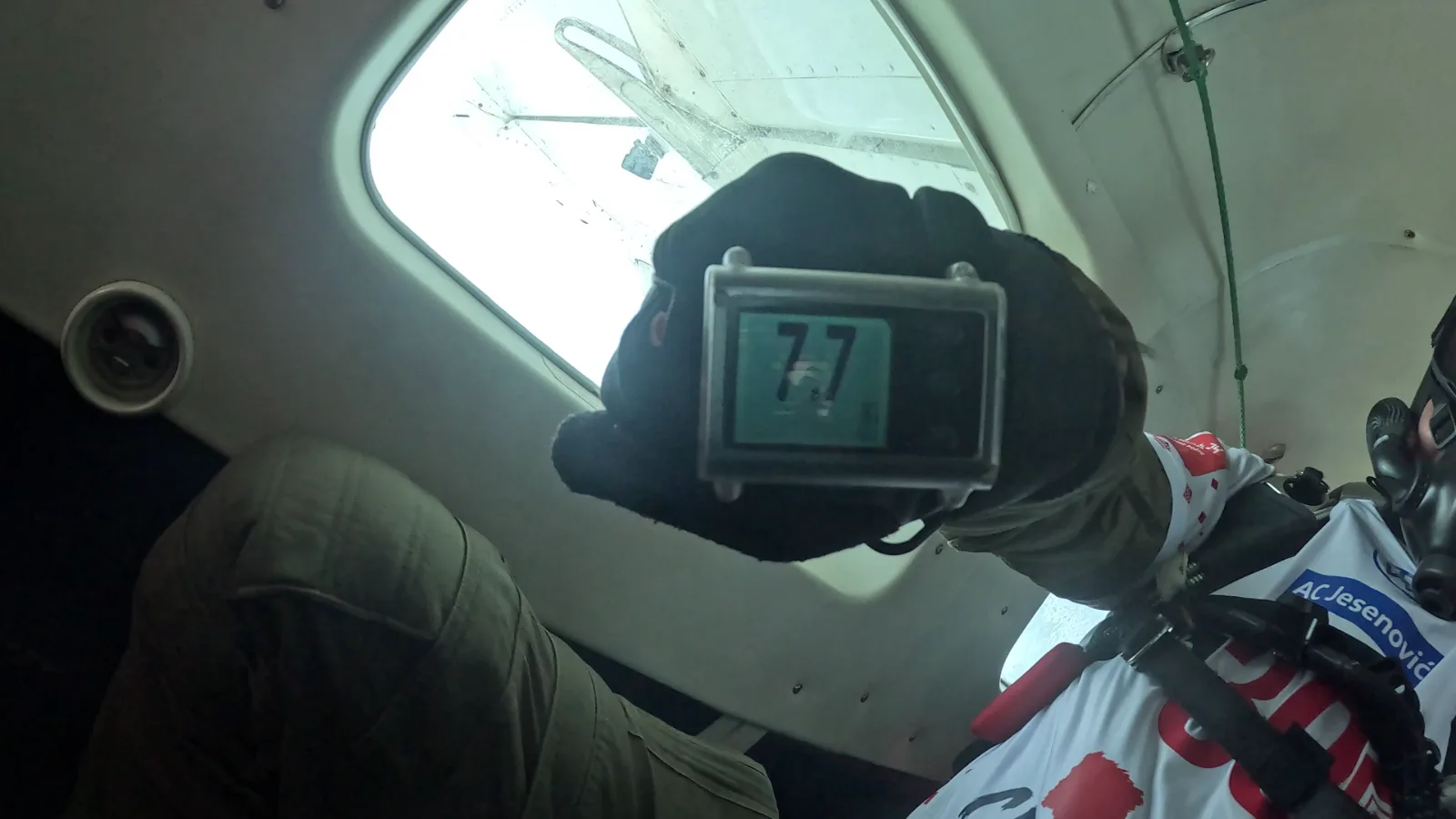
I glanced at my altimeter.
7,700 metres.
We certainly weren't going to complain about the extra 100 metres we'd been given.
Petar and I positioned ourselves at the aircraft door and nodded to signal that we were ready.
We jumped, our oxygen masks securely fastened beneath our ski goggles.
At this altitude, without supplemental oxygen, euphoria and impaired thinking can begin after as little as 15 seconds, with unconsciousness potentially following in just 180 seconds.
My body responded automatically, out of habit.
I extended my legs and brought my arms in. Years of experience told me I should start moving forwards.
But nothing happened.
During the briefing, we'd been warned that because the air at 7.6 kilometres is so much thinner, every movement would produce a much slower response than we were accustomed to at normal skydiving altitudes.
It would take longer to achieve the desired effect, and longer to stop a movement once it had begun.
Every movement therefore had to be performed more precisely and carefully to avoid the possibility of colliding with another skydiver during freefall.
We spent more than two minutes in freefall.
For comparison, a tandem skydive from 3,000 metres involves less than 40 seconds of freefall.
Once our parachutes opened, the rest of the jump was more or less business as usual.
I landed, and only then did it really sink in that I'd become one of just five Croatians ever to perform a jump like this.
We rewarded ourselves with a beer and spent some more time hanging out with fellow skydivers at the dropzone.
Project 7600 had been an absolute success.
Copenhagen, New Friends, and an Eight O'Clock Flight
On our way home, we stopped in Copenhagen and decided to experience the nightlife of Denmark's capital.
We found ourselves in a Danish pub, made friends with some English tourists and Copenhagen locals, and spent the night drinking and dancing until almost dawn.
There was just one small problem.
Our flight home wasn't departing from Copenhagen.
It was departing from Malmö.
As a result, the flight where all we had to do was sit in our seats turned out to be considerably more difficult than the one where we'd actually had to jump out of the airplane.
So, When Are We Going Again?
Petar is already trying to convince me that our next adventure should be a wingsuit HALO jump, probably somewhere above Iceland.
I'm still deciding whether I'll let him talk me into it.
Denmark and our HALO skydive were a truly unique experience.
They gave me more than two minutes of freefall, an entirely different sensation of flying, new friendships, and several days of great adventures with friends.
They also reminded me that even after 23 years of skydiving experience, there's still plenty that can surprise you.
Sometimes, all it takes is visiting a different dropzone, meeting new people, and trying something you've never done before.
In our case, that meant going all the way up to 7,700 metres.
And perhaps leaving for the airport a little earlier afterwards, because we almost missed our flight back to Zagreb.
Watch the video of our jump below!
Gallery
Select a photo to view it full size.