I'm Afraid of Heights. Can I Still Go Skydiving?
Afraid of heights but curious about tandem skydiving? Discover why freefall feels different, what to expect, and how to face your fears before your first jump.

"I'd love to go skydiving, but I'm afraid of heights."
That's one of the most common things we hear when talking to people about their first jump. It's often followed by something along the lines of: "I already get nervous standing on a ladder. What on earth would I do at the door of an airplane?"
A perfectly reasonable question. If looking down from an eighth-floor balcony makes you uncomfortable, it's hard to imagine jumping out of an airplane at four thousand meters as something you'd do for fun.
And yet, many people who have completed a tandem skydive and gone on to become active sport skydivers started out saying exactly the same thing. Some decided to jump out of curiosity, others for the adrenaline rush, and some simply wanted to face a fear that had followed them for years.
Sometimes, your first skydive begins long before you ever arrive at the dropzone — at the very moment you think: "Well, maybe I actually could do it."
What Are We Actually Afraid Of?
Fear of heights, fear of falling, and fear of flying aren't the same thing, although they can overlap. Some people are frightened by looking down at the ground, others by the possibility of losing their footing, while for some, the biggest challenge is simply getting into an airplane.
The scientific term for fear of heights is "acrophobia". The name comes from two Greek words: akron, meaning edge or summit, and phobos, meaning fear. Symptoms include an extreme, irrational fear of heights, which can sometimes manifest as panic attacks. This clinical condition affects approximately 2–5% of the population, with varying degrees of severity — so the chances that you belong to this group are relatively small.
Fear of falling (basophobia) is a natural fear experienced to varying degrees by the vast majority of humans and animals. It is associated more with anxiety about the sensation of falling and its potentially dangerous consequences than with height itself.
Fear of flying (aviophobia) probably needs little explanation. Its causes aren't entirely understood, but the condition is commonly associated with a lack of confidence in the safety and reliability of aircraft or their components.
Everyday discomfort with heights is natural, and most people experience it to some degree. People who show absolutely no fear of heights or falling are relatively rare. Research has shown that gradually exposing ourselves to situations that trigger fear can help us build tolerance and confidence over time.
But where does vertigo, a term you've probably heard before, fit into all this?
For those who have seen Alfred Hitchcock's 1958 film Vertigo, the movie might be their first association with a fear of heights. Hitchcock's main character does indeed suffer from this fear, but the medical term vertigo actually refers to a sensation of spinning or apparent movement. It is not another name for a fear of heights. If you experience symptoms like these, speak with your doctor before planning a skydive.
You don't need to know the medical terminology behind your fear to talk to a tandem instructor about it. All you need to do is honestly explain what's worrying you.
A Balcony and an Airplane Are Two Very Different Experiences
When you're standing on a balcony, you can clearly see the railing, the walls of the building, the pavement, and the cars below. These familiar visual references give you a very concrete sense of the distance between you and the ground.
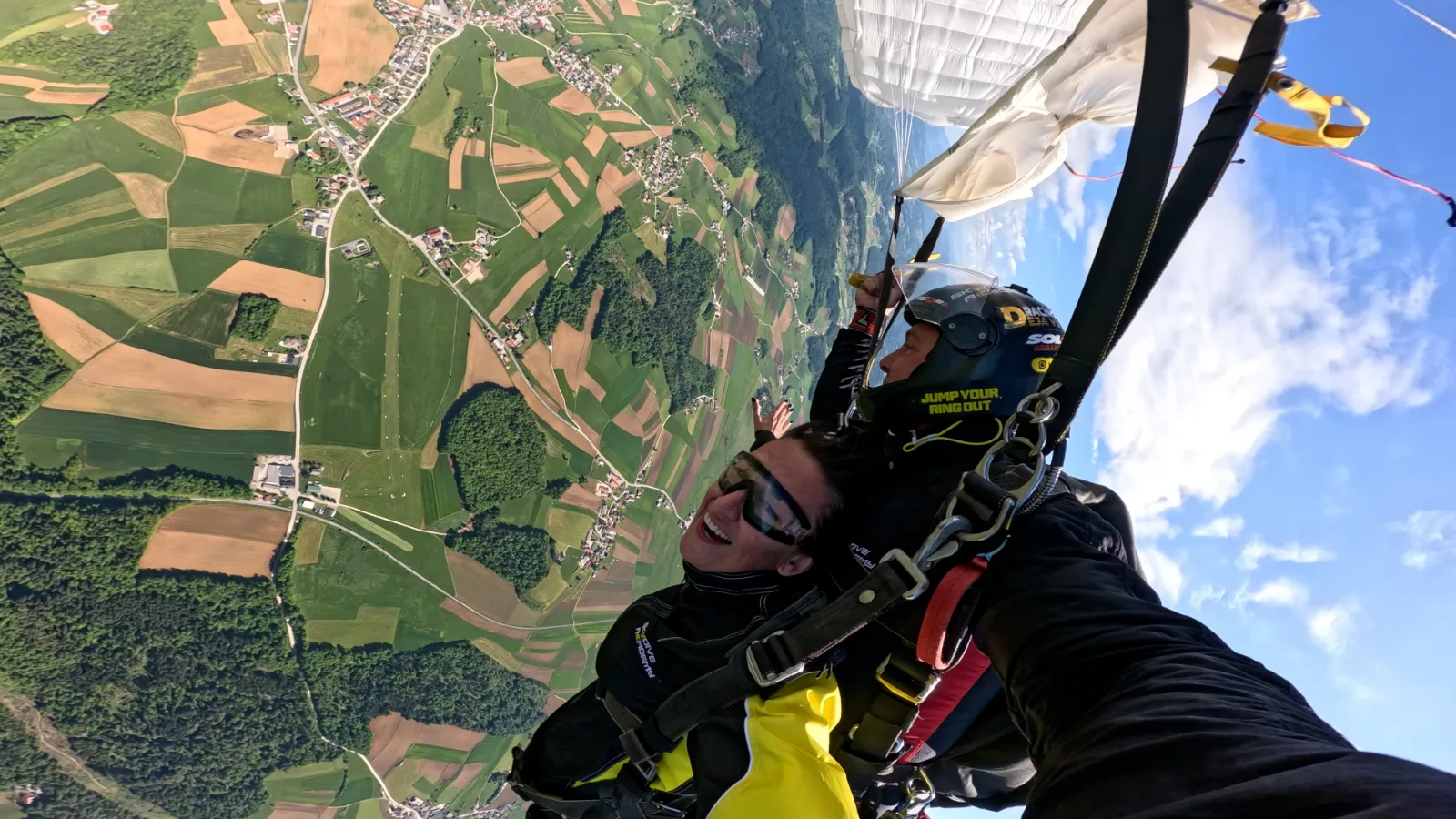
From an airplane flying at four thousand meters, the view looks completely different. Houses become tiny, roads resemble thin lines, and fields form a colorful patchwork. The landscape starts to look more like a map.
That's why skydivers often use an analogy: at lower altitudes, we perceive the ground in "3D", while from much higher up, it looks more like a "2D image".
For some people, this map-like perspective is much less intimidating than they expected. For others, the altitude still triggers fear. We're not going to promise that your discomfort will disappear as soon as the airplane climbs high enough, but it's worth considering that the experience might not be quite what you've imagined.
Why I Recommend a Tandem Skydive for Facing Your Fear
For anyone considering skydiving as a way of confronting their fear, my first recommendation is a tandem skydive.
Why? Because you're entering a completely new experience alongside someone who knows exactly what to expect, prepares you for what's coming, and guides you through every stage of your jump. You're not left to manage the entire experience on your own.
To help you understand the safety features of the parachute system used for your tandem skydive, your instructor will also be happy to explain the equipment, including the reserve parachute and the Automatic Activation Device (AAD), which is designed to activate the reserve parachute automatically under specific conditions.
You still have an important role to play: listen carefully during the briefing, practice the correct body position, and follow your instructor's directions. The instructor handles the main technical responsibilities, while their presence can give you additional confidence and a greater sense of security.
Of course, that doesn't eliminate the risks associated with skydiving, but it makes taking that first step more approachable for many people. You can experience the airplane ride, the exit, freefall, and flying beneath an open parachute before deciding whether you'd also like to pursue training through an AFF or Static Line program.
Above all, tell your instructor what you're afraid of. We're here to help.
The Moment the Door Opens
During the climb to jump altitude, you'll have the opportunity to talk with your tandem instructor, who will go through the jump with you once again, step by step. You'll also be surrounded by other skydivers preparing for their own jumps.
Our cameraman Petar always likes to point something out to our passengers at this stage: the other skydivers in the aircraft are usually relaxed, sometimes even joking around with each other. If they're not nervous, there's a pretty good chance you don't need to be either.
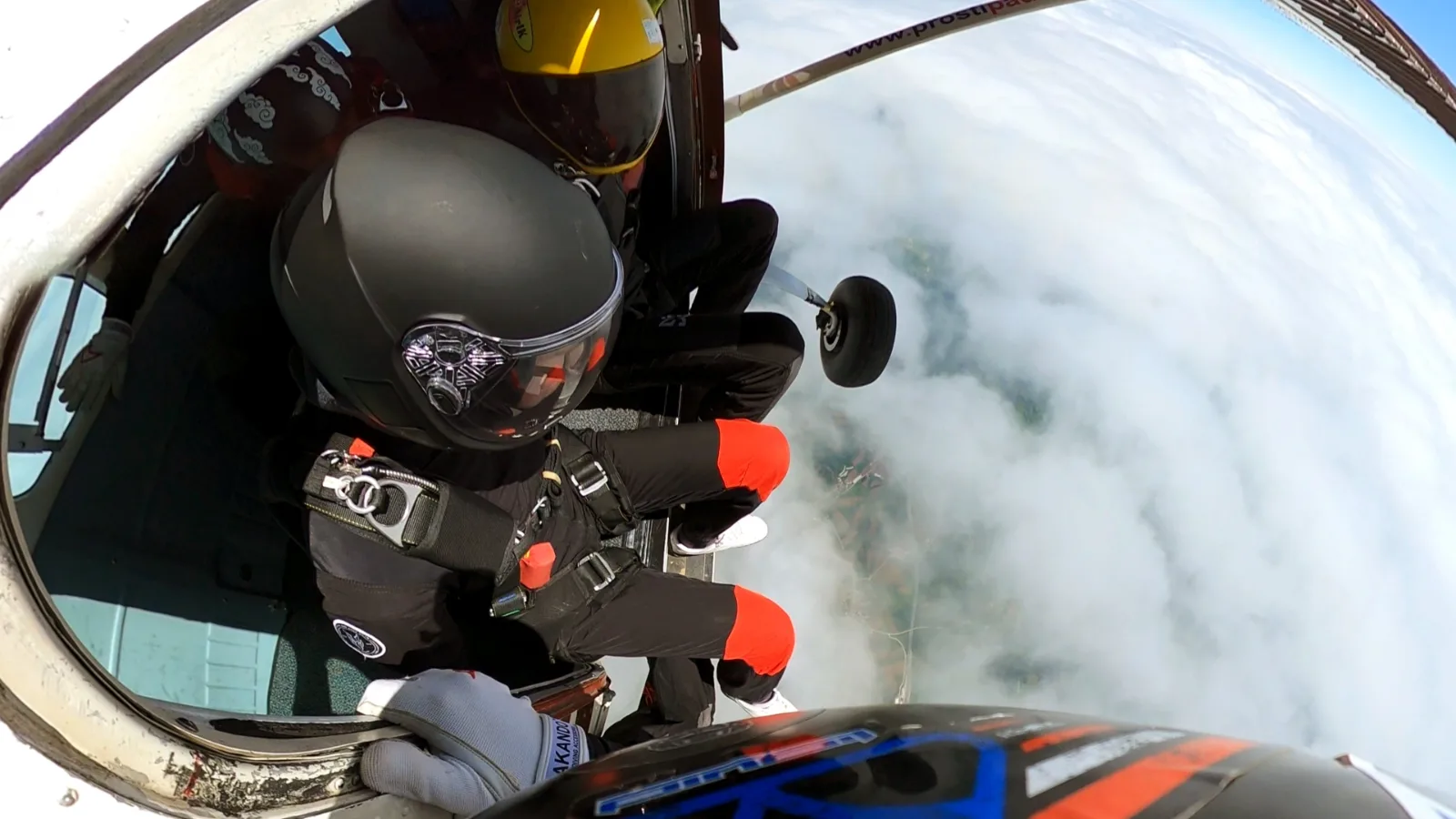
One of the most exciting moments of the entire experience is when the aircraft door opens. The airplane becomes louder, you'll feel the outside air rushing past, and the sport skydivers will begin exiting the aircraft.
Even experienced skydivers can feel their hearts beating a little faster at this moment.
What Happens After You Jump?
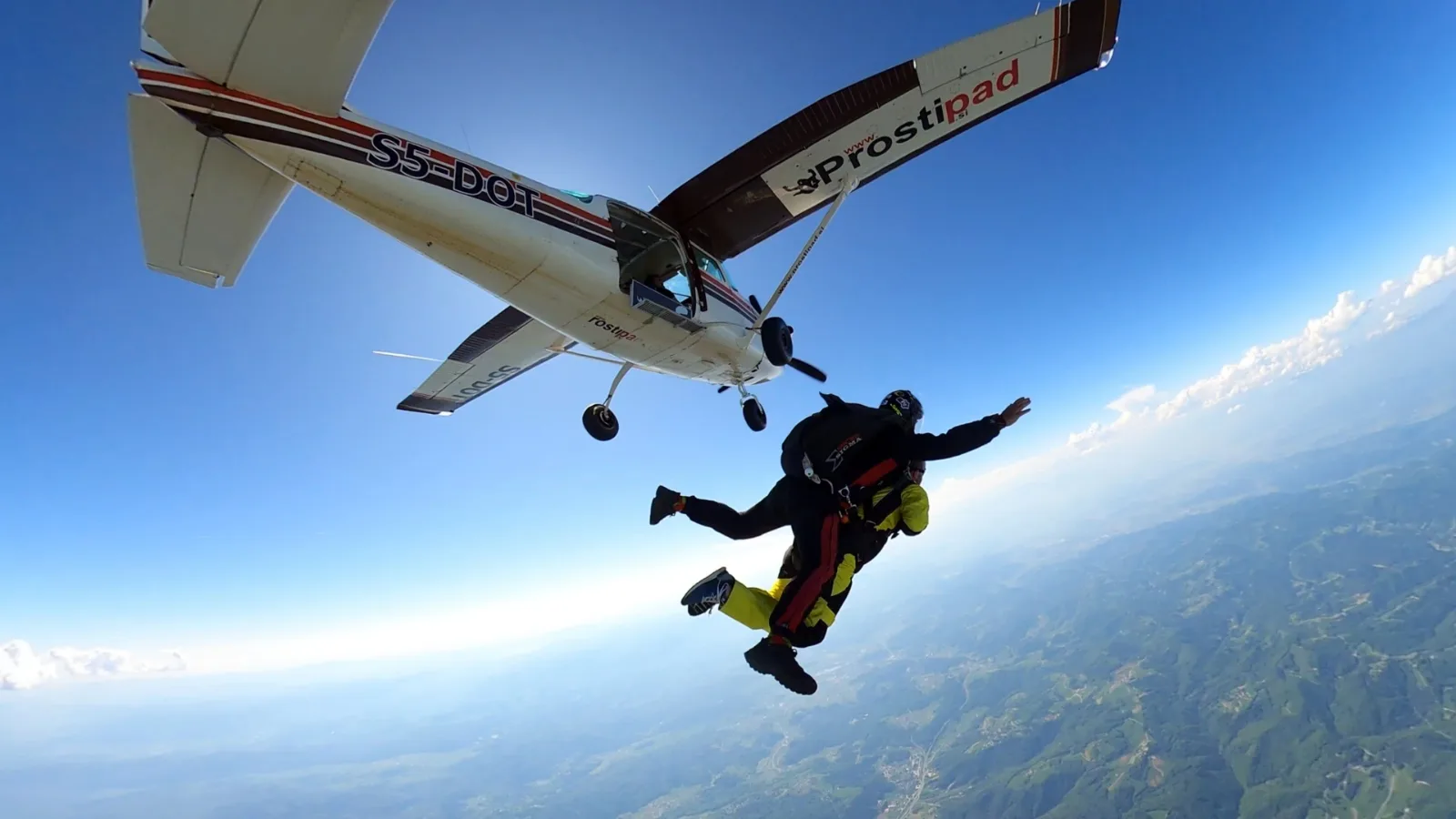
When it's your turn to jump, your tandem instructor will position you at the aircraft door. All you need to do is assume the body position you practiced during your briefing. After a few seconds, your instructor will guide you both out of the airplane.
What surprises most people is that exiting the aircraft doesn't usually produce the uncomfortable dropping sensation you might know from a roller coaster.
The feeling of freefall is difficult to describe accurately, but one way to imagine it is like lying on a mattress. The air rushing past your body creates resistance, giving you a surprising sensation of support as you fall.
If you're curious about the entire tandem skydiving experience, step by step, from making your reservation to landing back on solid ground, we've written another article dedicated to exactly that.
From "I'll Never Jump" to More Than 90 Skydives
Our pilot and fellow skydiver Maja experienced a fear of falling during her very first skydive.
At the time, she already had more than a thousand flight hours in various general aviation aircraft, but she had never actually jumped out of a perfectly good airplane.
She often jokingly recalls that when the door opened, she wanted to switch places with the pilot.
"Let him jump. I'll land the airplane!"
Nevertheless, she decided to take the leap, and she enjoyed the experience so much that today she's a licensed skydiver with a B licence and more than 90 jumps under her belt.
Of course, this little story doesn't mean your experience will be identical. We simply wanted to show you that even pilots with more than a thousand hours of flight experience can feel that primal, natural fear of falling — an instinct that's there to protect us.
Do I Have to Overcome My Fear Before Jumping?
You don't have to arrive at the dropzone completely fearless.
It's perfectly fine to come with questions, talk openly about your concerns, and give yourself enough time to prepare. If you're still unsure about booking your first jump, feel free to reach out using the details on our contact page.
Skydiving isn't a guaranteed treatment for phobias, and a single jump won't necessarily make you feel comfortable standing on every balcony from that day forward. If your fear seriously affects your everyday life or causes panic attacks, it's best to seek professional guidance before booking a skydive.
But if, alongside that nervousness, there's also a persistent little voice asking, "What would it actually feel like?", perhaps a tandem skydive isn't such a bad idea after all.
We can promise you that your heart will beat a little faster when the aircraft door opens. And we're pretty confident the view will leave you speechless, too.
But perhaps the biggest surprise will come after landing, when you hear yourself asking:
"So, when are we going again?"